


Ferrari 365 GTB/4 Daytona:
The Ultimate Front-Engine Ferrari
The Ultimate Front-Engine Ferrari
1968-1973 | 1,284 Built | The Last Great Front-Engine V12 GT
When Road & Track Magazine tested the Ferrari 365 GTB/4 in September 1970, they declared it “the best sports car in the world.” This wasn’t hyperbole. The Ferrari 365 GTB/4 Daytona represented the absolute pinnacle of front-engine Ferrari engineering before the marque’s inevitable shift to mid-engine supercars.
Introduced at the 1968 Paris Auto Salon, the 365 GTB/4 earned its unofficial “Daytona” nickname from Ferrari’s dominant 1-2-3 finish at the 1967 24 Hours of Daytona, a year before the car even debuted. Leonardo Fioravanti’s design at Pininfarina, fresh off the success of the Dino, created a machine that married aggressive aesthetics with genuine performance: 174 mph top speed from a 352-horsepower 4.4-liter V12.
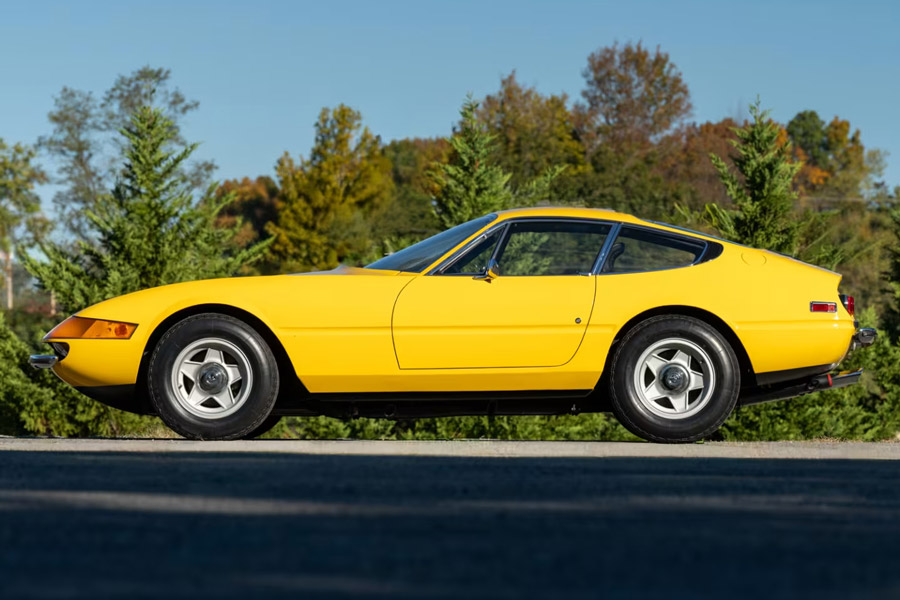
The Daytona was never meant to be easy. Road & Track famously called it “a man’s car,” noting that “the efforts needed to push the clutch, shift the gearbox, or turn the steering wheel take it clearly out of the go-to-market class.” This was a Ferrari that demanded full driver engagement, rewarding skill with an experience led by aesthetics and mechanical precision.
With only 1,284 coupes built between 1968 and 1973, plus 16 factory Competizione racing cars and 5 ultra-rare NART Spyders, the Ferrari 365 GTB/4 remains one of the most significant Ferraris ever produced. Each car deserves proper documentation, especially given that an estimated 140 coupes were later converted to spyder replicas, making authentication through the 365Ferrari registry critical for owners and buyers alike.

Ferrari 365 GTB/4 Daytona Quick Facts
Production: 1,284 coupes (1968-1973)
Serial Range: SN12301-SN17615
Engine: 4.4L Colombo V12, 4-cam, 352 hp
Top Speed: 174 mph (280 km/h)
0-60 mph: 5.4 seconds
Competition: 16 Competizione + 5 NART Spyders
Conversions: ~140 coupes later converted (not factory)
View our Complete Ferrari 365 Model Lineup: All 9 Variants
Join Our 365Ferrari Community Today
- Follow the community:Follow @365ferrari on Instagram and 365Ferrari on Facebook to see Ferrari 365 cars, historical context, events, and ongoing documentation.
- Join the Ferrari membership: Membership provides access to the full registry, owner network, marketplace visibility, and documentation resources. One membership tier. Full access. $125 per year.
Submit your Ferrari to the registry: If you own a Ferrari 365, submitting your car allows it to be documented, verified, and preserved within the registry, supporting long-term provenance and accuracy.
The Ferrari 365 GTB/4 registry includes verified chassis records, historical documentation, and ownership-level research maintained for accuracy and discretion.
The rest of the content on this page is restricted to members that provides public historical context. Detailed registry records, documentation references, and navigation tools are available through 365Ferrari membership.
Explore 365Ferrari Membership
Verified documentation. Trusted provenance. Shared knowledge.
Ferrari 365 GTB/4 History
The Ferrari Daytona is a two-seat grand tourer produced by Ferrari from 1968 to 1973. It was introduced at the Paris Auto Salon in 1968 to replace the 275 GTB/4, and featured the 275’s Colombo V12 with a larger cylinder bore for 4,390 cc (4.4 L; 267.9 cu in). It was offered in Berlinetta and Spyder forms. The car came in two variants: the 365 GTB/4 coupe, and the 365 GTS/4 convertible.
The Ferrari 365 GTB/4, for the Gran Turismo Berlinetta (but popularly known as the Daytona) was as much a sensation at its introduction as the Dino had been just a year earlier. Both machines represented the evolving boundary between the era of the front engine, rear wheel drive design and the new era of mid-engine rear drive machines. The 365 represented the pinnacle of technology and design. It was the artful conception of Leonardo Fioravanti at Pininfarina, who was fresh off the success of the Dino. The 365 GTB/4, like the Dino, features the interplay of curves and sharp edges.
Road and Track Magazine in September 1970 summed up its findings as: “The Ferrari 365 GTB/4 is the best sports car in the world…. It should be clear that the 365GTB/4 is a man’s car. There is nothing crude about the machinery, mind you, but the efforts needed to push the clutch, shift the gearbox, or turn the steering wheel take it clearly out of the go-to-market class.” This machine created a physical experience that was led by aesthetics but also demanded the full attention of the driver.
Ferrari 365 GTB/4 Production and Development
Ferrari produced exactly 1,284 365 GTB/4 coupes between 1968 and 1973, with serial numbers running from SN12301 to SN17615. Beyond the standard production coupes, Ferrari built 16 factory Competizione racing cars (1971-1973, SN12467-SN16717) and commissioned 5 NART Spyders designed by Michelotti (1971, SN14299-SN16467). In later years, approximately 140 standard coupes were converted to spyder replicas, conversions that significantly diminish value compared to authentic coupes.
The 365 GTB/4’s introduction at the Paris Auto Salon in October 1968 came at a pivotal moment in Ferrari’s history. While competitors like Lamborghini had embraced mid-engine layouts with the Miura, Enzo Ferrari remained committed to front-engine supremacy. The Daytona represented his engineering philosophy: a conventional layout executed to absolute perfection.
The car’s “Daytona” nickname, never officially used by Ferrari, came from the press and enthusiasts who associated the new berlinetta with Ferrari’s triumphant 1-2-3 finish at the 1967 24 Hours of Daytona, achieved with the 330 P3/4 and 412P. The name stuck, and Ferrari eventually accepted it officially, making it ironic that Competizione versions would later dominate at Daytona in 1972 and 1973.
Ferrari 365 GTB/4: Evolution Through Production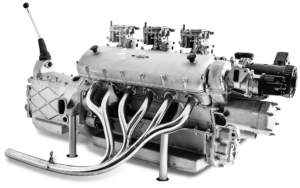
Early 365 GTB/4 models (1968-1970) featured distinctive plexiglass headlight covers over fixed lamps. This aerodynamically beneficial design reduced drag but proved prone to cracking and yellowing. Safety regulations eventually required a change, and from 1971 onward, Ferrari switched to pop-up headlights. While more practical and requiring less maintenance, the pop-up mechanism was less aerodynamically efficient and disrupted Fioravanti’s original clean design intent.
Today, early plexiglass cars command a 15-20% premium over pop-up versions. Collectors prefer them for their rarity (fewer production years), originality to Fioravanti’s vision, and more visually distinctive appearance. The 365Ferrari registry tracks headlight configuration by serial number, providing authentication for buyers and sellers.
Production ended in 1973, marking Ferrari’s transition to the mid-engine era with the Berlinetta Boxer. The 365 GTB/4 Daytona represented the last great front-engine V12 GT Ferrari would produce.
Design & Styling: Ferrari 365 GTB/4
Leonardo Fioravanti’s design at Pininfarina represented the artful conception of a master at the peak of his powers. Fresh from the Dino’s success, Fioravanti created a shape that balanced the interplay of curves and sharp edges with classic GT proportions: a long hood, short deck, and an aggressive stance just 44.5 inches tall.
Unusually for Ferrari at the time, the 365 GTB/4 underwent wind tunnel development. Form followed function, every line served an aerodynamic purpose, from the Kamm tail’s abrupt cutoff to the functional NACA ducts cooling the brakes. The flat rear panel with four round taillights, aggressive rear haunches, and purposeful side vents all contributed to both aesthetics and performance. Chrome was minimal and functional, not decorative.
The interior continued the driver-focused philosophy. The gated shifter occupied a prominent position, the large tachometer dominated the traditional Ferrari instrument cluster, and competition-derived elements appeared throughout the spartan but purposeful cockpit. Visibility was limited, form prioritized over function, and minimal sound deadening meant occupants heard every mechanical note from the 6-Weber V12 symphony.
Ferrari 365 GTB/4 Specifications
Engine: Colombo V12, 4,390 cc (4.4L), DOHC per bank (4-cam), 352 hp @ 7,500 rpm (Euro) / 325 hp (US), 6x Weber 40 DCN 20 downdraft
Chassis: Tubular steel spaceframe, aluminum panels, 5-speed manual rear transaxle, 52:48 weight distribution, 3,530 lb
Suspension: Independent front/rear, A-arms, coil springs, ventilated disc brakes
Performance: 174 mph top speed, 0-60 in 5.4 seconds, 13.8-second quarter mile @ 107 mph
Competition Variants
365 GTB/4 Competizione
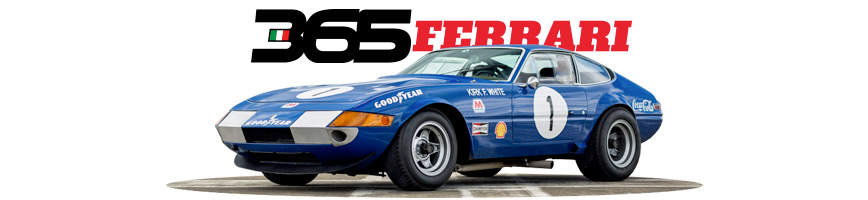
Ferrari built 16 factory competition cars between 1971 and 1973 (SN12467-SN16717). These Competizione models featured aggressive weight reduction through aluminum body panels, plexiglass windows, and stripped interiors. Racing-tuned engines produced approximately 450 horsepower versus the street car’s 352 hp.
The racing success was immediate and dominant. A Competizione took 1st overall at the 1972 24 Hours of Daytona, followed by a complete Ferrari sweep of the 1973 race: 1st, 2nd, and 3rd overall. Competizione Daytonas also secured multiple European GT championship wins, with privateer racing continuing through the mid-1970s.
Today, Competizione examples command multi-million dollar values when they appear at auction. Competition provenance documentation through the 365Ferrari registry adds significant value to these already extraordinary machines.
365 GTB/4 NART Spyder (Michelotti)
In 1971, Ferrari produced just 5 cars commissioned by Luigi Chinetti’s NART (North American Racing Team), with serial numbers SN14299-SN16467. Designed by Michelotti rather than Pininfarina, these factory-sanctioned open-top variants predated the official 365 GTS/4.
The NART Spyder occupies a unique position, neither an official GTS/4 nor a conversion, but rather a factory collaboration. These five cars represent the most valuable 365 variants, with values reaching into the multi-millions. Authentication is critical, and the 365Ferrari registry tracks all 5 known examples.
Converted Spyders: A Warning
Approximately 140 365 GTB/4 coupes were converted to spyder replicas, primarily during the 1980s and 2000s when GTS/4 values soared. These conversions significantly diminish value, a converted car is worth less than an authentic GTB/4 coupe, let alone a genuine GTS/4.
Red flags include missing documentation, VIN irregularities, and improper windshield frames. The 365Ferrari registry plays a critical authentication role, protecting buyers and sellers by documenting genuine coupes versus converted cars. For complete GTS/4 specifications and authentication guidance, see our Ferrari 365 GTS/4 history page.
Ferrari 365 GTB/4: The Driving Experience & Ownership
The 365 GTB/4 delivers exactly what Road & Track described: a driving experience “clearly out of the go-to-market class.” Heavy clutch, notchy gearbox, and unassisted steering demand full driver engagement. The V12 soundtrack from six Webers creates a mechanical symphony. Despite 3,530-pound weight, rear transaxle distribution makes it nimble. High-speed stability is excellent; low-speed maneuverability requires patience.
This is not a comfortable GT like the 365 GTC/4. Limited luggage space, poor visibility, heavy controls, no power steering or A/C (most examples), built for driving enthusiasts, not casual owners.
Ownership rewards commitment. Parts availability is reasonable (shared components with other 365s). Specialist maintenance required, Weber tuning and valve adjustments demand expertise. Engine-out services are expensive but manageable. Strong community support through active owner network.
Market Values & Collectibility of the Ferrari 365 GTB/4
Values range from $500,000-900,000+ depending on condition and specifications. Plexiglass headlights command 15-20% premiums, European-spec models (352 hp) bring 10-15% more than US versions, and matching numbers add 10-20%, per registry transaction data tracked since 2015. Comprehensive documentation increases value 20-40%.
What appreciates: Plexiglass headlights, European specification, matching numbers, complete service history, original paint/interior, competition provenance, registry documentation.
What diminishes value: Spyder conversions (major loss), modifications, missing documentation, accident history, multiple repaints, deferred maintenance.
The 365 GTB/4 shows consistent 20-year appreciation as the last great front-engine Ferrari. Limited production (1,284 coupes) ensures scarcity. Competizione examples command multi-million dollar prices. Registry documentation is increasingly critical for authentication, plexiglass cars appreciate fastest. Key risk: converted spyders should be avoided.
Ferrari 365 GTB/4 in the Registry
The 365Ferrari registry tracks serial numbers SN12301-SN17615, authenticating against factory production records, verifying plexiglass versus pop-up headlight configuration, identifying converted spyders, and documenting competition variants (16 Competizione + 5 NART).
Registry entries include: Chassis verification, original build specifications (Euro vs. US, plexiglass vs. pop-up, original colors), ownership history, restoration documentation, competition history, high-resolution photography, conversion status.
Registry benefits: Authentication for insurance/sales, conversion detection, specification verification, 20-40% resale value increase, connection to worldwide Daytona owners, priority parts/knowledge access, show documentation, competition provenance tracking.
[Submit Your Ferrari 365 GTB/4 to Registry →]
Frequently Asked Questions: Ferrari 365 GTB/4
How many Ferrari 365 GTB/4 Daytonas were built?
Ferrari produced 1,284 coupes (1968-1973, SN12301-SN17615), plus 16 factory Competizione racing cars (1971-1973) and 5 NART Spyders by Michelotti (1971). Approximately 140 coupes were later converted to spyder replicas, not factory cars. Production exceeded the GTS/4 (122) but was less than the GTC/4 (505).
Why is it called “Daytona”?
The unofficial nickname originated from Ferrari’s 1-2-3 finish at the 1967 24 Hours of Daytona, a year before the car debuted. Press and enthusiasts adopted the name; Ferrari used only “365 GTB/4” officially. Ironically, Competizione versions later won at Daytona in 1972 and swept 1st-2nd-3rd in 1973.
What’s the difference between plexiglass and pop-up headlights?
Early cars (1968-1970) featured plexiglass covers over fixed headlights, aerodynamically beneficial but prone to cracking. Later cars (1971-1973) used pop-up headlights for safety compliance. Collectors prefer plexiglass cars, which command 15-20% premiums for rarity and original design intent. The registry tracks headlight configuration by serial number.
How does the GTB/4 compare to the GTS/4?
Mechanically identical, same engine, chassis, performance. Only difference: coupe versus convertible body. Production: 1,284 GTB/4 versus 122 GTS/4. The GTS/4 is worth 2-3x more due to extreme rarity. However, ~140 GTB/4s were converted to spyder replicas, converted cars are worth less than authentic coupes. See our 365 GTS/4 authentication guide.
Is the Ferrari 365 GTB/4 a good investment?
Consistent 20-year appreciation trend. Recognized as the last great front-engine Ferrari with limited production (1,284) ensuring scarcity. What appreciates fastest: plexiglass headlights (15-20% premium), European specification (352 hp), matching numbers, documented history, competition provenance. Registry documentation adds 20-40% value. Key risk: avoid converted spyders.
What should I look for when buying a Ferrari 365 GTB/4?
Critical checks: Matching numbers (chassis/engine/transmission), headlight configuration (plexiglass vs. pop-up), European vs. US spec (352 hp vs. 325 hp), conversion status, service history, original color/interior documentation.
Red flags: Spyder conversion, non-matching numbers, multiple repaints, missing documentation, accident damage, deferred maintenance (especially Weber carburetors).
Pre-purchase inspection by Ferrari specialists is mandatory. Registry provides documented examples, authentication services, and owner network verification.
Explore More Ferrari 365 Models
The Ferrari 365 GTB/4 Daytona was the performance flagship of the 365 series, but Ferrari offered 8 other variants from 1966-1976 for different purposes.
Similar Performance Models
- Ferrari 365 GTS/4: Open-top Daytona, 122 built (1969-1973)
- Ferrari 365 GT4 BB: Berlinetta Boxer, first mid-engine 12-cylinder
Practical 2+2 Models
- Ferrari 365 GTC/4: Comfortable 2+2 GT, 505 built (1971-1972)
- Ferrari 365 GT 2+2: Family Ferrari, 801 built (1968-1971)
- Ferrari 365 GT4 2+2: GTC/4 successor, 525 built (1972-1976)
View all 9 Ferrari 365 models and production timeline →
Document Your Ferrari 365 GTB/4
The Ferrari 365 GTB/4 Daytona represents the pinnacle of front-engine Ferrari engineering. With only 1,284 coupes built, each car deserves proper documentation and authentication, especially given the prevalence of spyder conversions and non-original modifications.
Ferrari Registry Benefits for GTB/4 Owners
Authentication: Verify genuine coupe versus spyder conversion
Provenance: Document ownership history and competition heritage
Value Enhancement: Increases resale value 20-40%
Community: Connect with other Daytona owners worldwide
Parts Network: Access to restoration specialists and original parts sources
Show Documentation: Comprehensive records for concours and auctions
Headlight Configuration: Verify plexiglass versus pop-up originality
Current Ferrari 365 GTB/4 Registry
Links to More Information:
365 Michelotti:
[/mepr_show]
