


Selling a Ferrari 365 is not like selling a modern vehicle. The buyer pool is highly specialized, Ferrari collectors are exceptionally knowledgeable, and pre-sale preparation carries disproportionate weight in the final transaction price. A vintage Ferrari 365 is a specific historic asset, and the collectors who pursue these cars arrive at every transaction armed with thorough research and strict expectations that most sellers underestimate.
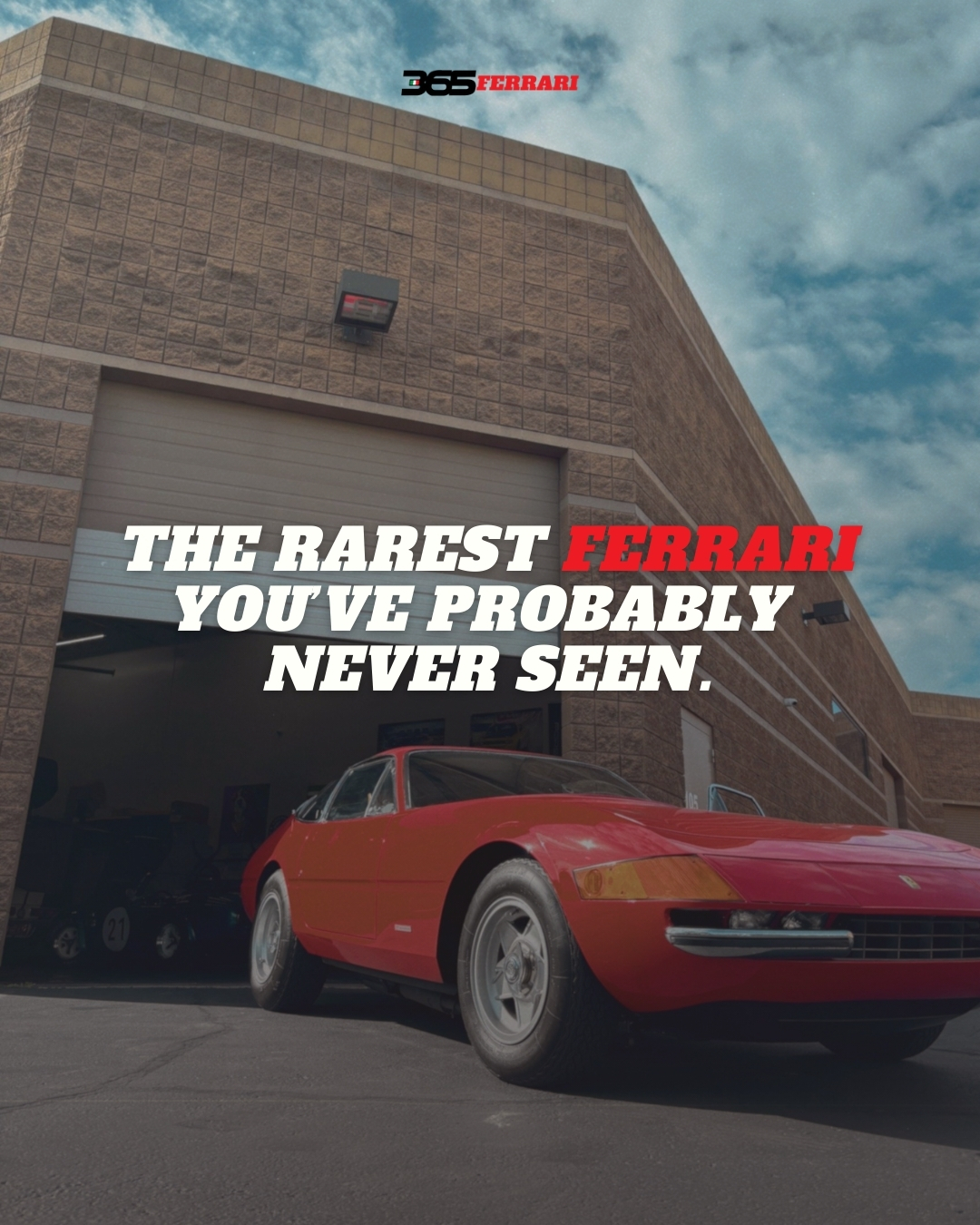
A Seller’s Guide to the Private Market
This Ferrari 365 seller guide exists because most of what has been written about how to sell a classic Ferrari is written by the people who want to buy them. This is a dedicated seller’s resource, built on the experience of the only active registry for the 365 series. Before committing to any transaction channel, spend time understanding your car’s current market value. What you do with that information will shape every decision that follows.
If you are ready to sell your Ferrari, understanding the market before listing your vehicle is one of the most important steps in the entire selling process.
Every car in the 365 series has a history that extends beyond the factory record. If you own or have owned a Ferrari 365, we want to hear about it.
Understanding the Car Market for a Vintage Ferrari 365
The Ferrari 365 series spans nine distinct models produced between 1966 and 1976. From the iconic Ferrari 365 GTB/4 Daytona and the exceptionally rare Ferrari 365 GTS/4 Daytona Spider to the grand touring Ferrari 365 GT 2+2 and the mid-engined Ferrari 365 GT4 BB, each variant carries its own distinct buyer profile, its own financial ceiling, and its own sensitivity to mechanical condition and documentation. What a premier Daytona achieves at a high-profile auction during Monterey Car Week tells you very little about what a 2+2 grand tourer will bring in a private transaction during the same season.
The active buying audience for any specific 365-series variant at any given moment is narrow. However, when you are learning how to sell a vintage Ferrari, you quickly realize this concentrated audience is not a structural disadvantage. Buyers in this segment are highly motivated, financially capable, and rarely browsing casually.
When a correct car is presented honestly with complete records, transactions close decisively. Most problems arise when sellers overprice assets on the basis of outlier public auction results, or when they bring a car to the private car market before it can withstand the strict, deep-dive scrutiny a serious buyer will apply.
Production numbers certainly matter, but scarcity alone does not move the needle on a valuation. Model-specific demand, baseline mechanical condition, and true historical provenance are the real determinants of asset liquidity. You must know exactly which of these factors is working in your favor before deciding how and where to market your vehicle.
Understanding the Car Market for a Vintage Ferrari 365
The Ferrari 365 series spans nine distinct models produced between 1966 and 1976. From the iconic Ferrari 365 GTB/4 Daytona and the exceptionally rare Ferrari 365 GTS/4 Daytona Spider to the grand touring Ferrari 365 GT 2+2 and the mid-engined Ferrari 365 GT4 BB, each variant carries its own distinct buyer profile, its own financial ceiling, and its own sensitivity to mechanical condition and documentation. What a premier Daytona achieves at a high-profile auction during Monterey Car Week tells you very little about what a 2+2 grand tourer will bring in a private transaction during the same season.
The active buying audience for any specific 365-series variant at any given moment is narrow. However, when you are learning how to sell a vintage Ferrari, you quickly realize this concentrated audience is not a structural disadvantage. Buyers in this segment are highly motivated, financially capable, and rarely browsing casually.
When a correct car is presented honestly with complete records, transactions close decisively. Most problems arise when sellers overprice assets on the basis of outlier public auction results, or when they bring a car to the private car market before it can withstand the strict, deep-dive scrutiny a serious buyer will apply.
Production numbers certainly matter, but scarcity alone does not move the needle on a valuation. Model-specific demand, baseline mechanical condition, and true historical provenance are the real determinants of asset liquidity. You must know exactly which of these factors is working in your favor before deciding how and where to market your vehicle.
Establishing an Honest Asking Price
Pricing a Ferrari 365 correctly requires layering several data sources rather than anchoring to a single recent auction result. Start with published results from major houses over the past 24 to 36 months for your specific model variant, and then adjust downward to account for buyer’s premiums, which typically add 10 to 15 percent to the final hammer price. That premium belongs to the auction house, not to a comparable private seller.
From that adjusted baseline, evaluate your car against the following factors:
- Matching numbers status: Engine and gearbox casting numbers that align with factory build records carry a meaningful premium over non-matching configurations.
- Color combination: Correct, period-appropriate factory color pairings command stronger market interest than repainted or recolored cars, particularly on the Daytona.
- Documentation completeness: A continuous service history stretching back to delivery is rare. When it exists, it justifies a material premium. Gaps in the record invite proportional discounts.
- Ferrari Classiche certification status: A certified car occupies a different tier of the market and should be priced accordingly.
- Deferred maintenance: Outstanding mechanical items discovered in a pre-sale inspection should be priced into the ask honestly or addressed before listing. Buyers will find them.
The 365 registry maintains historical transaction data across the Ferrari model family. Consulting that record before you set a price is the most direct way to calibrate your position against what the market has actually paid for comparable cars, rather than what public auction narratives suggest.
Access to accurate registry-backed valuation data gives sellers a clear advantage before entering the market. Learn more: What Is a Ferrari 365 Registry?
Ferrari 365 Selling Options: Auction vs. Dealer vs. Private Sale
Most Ferrari owners investigate the best way to sell a Ferrari 365 and realize they must weigh three primary channels: a private transaction handled directly or through a specialist, a consignment arrangement with a marque dealer, or placement with a major collector car auction house. Choosing the right channel is one of the most consequential decisions in the entire lifecycle of the asset.
The Private Sale Process
Navigating the transaction as a Ferrari 365 private seller typically delivers the best net financial return. There is no auction house buyer’s premium or seller’s commission eating into your equity, and you are transacting directly with the principal Ferrari buyer. The tradeoff is administrative effort, personal privacy, and qualified audience access.
Finding a serious prospect when selling a Ferrari 365 privately requires being directly in front of the right network. General digital vehicle platforms rarely surface qualified, capitalized buyers for a car at this price point. Private sales for a vintage V12 work best when the seller possesses an existing network in the collector world, or when the asset is marketed cleanly within a registry community that already understands the mechanical nuances of the model family.
The 365Ferrari sales network is the only registry-backed marketplace dedicated exclusively to the 365 series. It positions your car in front of active buyers who are already researching these specific variants rather than browsing general classic car inventory.
For sellers seeking direct access to qualified buyers, the 365Ferrari network was built specifically for this stage of the selling process.
The Dealer Alternative
Opting for a dealer consignment arrangement means accepting a direct margin concession in exchange for an immediate showroom footprint and a reduced administrative burden on your part. If a clean, quiet, and fast exit matters more than maximizing the final dollar amount, that trade makes sense. However, if optimizing net financial return is the primary priority, dealer consignment rarely produces the best mathematical outcome for a seller.
The Auction Dynamic
When comparing an auction vs. dealer vs. private sale Ferrari path, public auctions carry a highly volatile logic. Competitive bidding in a packed room can occasionally produce record-breaking results that no private transaction would have reached. However, it can also produce the opposite effect. A car that fails to meet its reserve or passes publicly carries that negative mark in its chassis history permanently.
Furthermore, auction transactional fees are substantial on both sides of the ledger, and not every 365 chassis is a suitable candidate for that high-pressure environment. Cars with complex international histories, minor gaps in their service logs, or deferred mechanical maintenance present poorly under auction-level scrutiny.
On seasonal timing: The collector car calendar concentrates around specific windows. Pebble Beach and Monterey in August generate the strongest public attention and the highest auction volumes. Spring concours events and the Cavallino Classic in January also move activity in the Ferrari community. If you are targeting a public auction, aligning your consignment timeline to these windows maximizes competitive bidding pressure. For private transactions, timing matters less, but entering the car market in the first quarter gives you the full selling season to work with before summer.
How to Prepare a Ferrari 365 for Sale
Preparation is where sellers gain or lose thousands of dollars in equity before a single prospect has even inspected the vehicle. Securing a pre-sale inspection by a qualified Ferrari specialist, not a general modern exotic car shop, gives you a transparent picture of outstanding mechanical items and provides an official document you can share openly with serious prospects.
Specialist Pre-Sale Inspection >> Disclose Outstanding Items >> Mitigate Buyer Anxiety >> Clean Transaction
What to know before selling a Ferrari 365 is that advanced buyers will find the faults regardless. A classic Ferrari sold with known faults that are disclosed honestly and priced into the transaction accordingly produces a much cleaner and safer transaction than one where mechanical deficiencies emerge unexpectedly mid-negotiation.
A smooth selling process depends heavily on transparency, preparation, and presenting the vehicle honestly from the beginning.
On the cosmetic side, contextual history matters just as much as flawless paint. An honest, beautiful patina on a numbers-matching car with strong provenance often reads better to sophisticated collectors than a recent repaint of uncertain factory color accuracy. Know exactly what your vehicle represents before deciding what aesthetic preparation actually serves the sale. Over-restoration in the wrong areas signals seller anxiety rather than mechanical confidence, and experienced collectors notice the difference immediately.
Photographs for initial digital presentation must be taken in excellent natural light on a clean, neutral surface. Your presentation gallery must include explicit mechanical detail, original interior upholstery condition, structural undercarriage photos, and any notable factory features. The caliber of your initial presentation directly shapes the quality and seriousness of the inquiries you receive.
The Critical Role of Ferrari 365 Provenance and Documentation
When selling a Ferrari 365, provenance is never a secondary consideration. It is a primary driver of asset value and investor confidence. A vehicle with a coherent, traceable history supported by original factory documents, period service records, and clear ownership documentation is a fundamentally different investment proposition from a car where the paperwork trail ends abruptly in the 1980s.
[Chassis Paperwork Missing] >> High Risk Speculation >> Heavy Price Discounts [Verified Factory Build Records] >> Investment-Grade Asset >> Price Value Premium
Securing proper Ferrari 365 documentation for sale purposes should include looking into factory authentication. Ferrari Classiche certification provides formal factory verification for qualifying 365-series cars. A certified car carries a meaningful premium for international collectors who require absolute asset assurance. For sellers of a premier Daytona, Classiche status can be a decisive closing factor, particularly for overseas Ferrari buyers who are approaching the vehicle without firsthand knowledge of its regional history.
The Ferrari Classiche Red Book documents the car as it left the factory. The 365 registry preserves everything that follows. Together, these two records constitute the most complete provenance portfolio a seller can present.
The baseline documentation portfolio that serious Ferrari buyers expect to see includes:
- The original factory build sheets, if available
- A continuous, chronological service history file
- Hard evidence of correct, matching-numbers engine and gearbox castings
- A clean title with no legal or financial encumbrances
- Any correspondence related to prior restorations or engine-out services
Gaps in the historical record do not automatically end an acquisition negotiation, but they do invite heavy scrutiny and downward price pressure. Addressing what can be researched and resolved before entering the open market is always preferable to explaining absences once a buyer is engaged.
Registry-Verified Provenance
The 365 registry maintains chassis-level records that no general classic car database replicates. Registering your vehicle before listing it for sale establishes a verified, institutional record of its ownership and condition history that exists independently of the sale transaction itself. For buyers conducting due diligence on a specific chassis, that registry record is a meaningful differentiator from cars with no institutional documentation outside the seller’s own file.
International Buyer Considerations
The Ferrari 365 market is global. A significant portion of serious acquisition interest originates from collectors in Europe, Japan, the Middle East, and Australia. Sellers who are prepared to accommodate international transactions consistently access a larger and more competitive buyer pool.
Several practical considerations apply to cross-border transactions:
- Export documentation: United States federal export regulations require filing an Electronic Export Information declaration through the Automated Export System for vehicles valued above the reporting threshold. Confirm current requirements with a licensed customs broker before entering negotiation with an international buyer.
- Import duty and homologation: Different destination markets carry different import duty structures and technical compliance requirements. It is not your obligation to manage the buyer’s import process, but understanding the general landscape helps you anticipate buyer questions and positions you as a credible, prepared seller.
- Payment structure: International transactions almost universally require irrevocable wire transfer in immediately available funds prior to release of the vehicle. Escrow services that specialize in high-value vehicle transactions are widely used and provide appropriate protection for both parties.
- Shipping logistics: Enclosed container shipping to major international ports is standard practice for vehicles at this value tier. Work with a transport specialist who has direct experience moving vintage Ferrari inventory across the specific corridors your buyer requires.
What Serious Vintage Ferrari 365 Buyers Expect
A serious buyer operating at this level of the market will expect immediate access to an independent pre-purchase inspection performed by their own trusted specialist. This is not a concession to the buyer. It is a standard condition of any well-run classic Ferrari transaction. Sellers should be fully transparent about the vehicle’s condition, prior accident history, body panel work, engine-out services, and any deviations from original factory specifications.
The vintage Ferrari community is exceptionally well connected, and information surrounding specific chassis numbers circulates constantly among historians, restorers, and active collectors. Representations that do not align with the vehicle’s documented history or physical condition are quickly uncovered during the selling process.
When you are ready to transition from preparation to active market placement, the 365Ferrari sales network is the correct next step. As the only registry-backed marketplace dedicated exclusively to the 365 series, it connects serious sellers directly with qualified buyers already engaged in this market.
Ready to sell your Ferrari? Please call 365Ferrari to discuss your vehicle, establish your registry record, and connect with a network built specifically for Ferrari 365 owners.
Access Your Selling and Registry Resources
Establishing an active 365Ferrari membership connects you with a global community of owners, historical researchers, and elite collectors unified around the nine variants built during Maranello’s legendary hand-built V12 era.
Ready to list your vehicle? Register it through the secure Ferrari submission portal to establish a verified chassis record before you enter the market.
Returning member? Log in to access your account dashboard, review active buyer inquiries, and manage your vehicle listing.
Secure full registry access with a 365Ferrari yearly membership and take complete control of your asset’s market footprint, including access to historical transaction data and the full 365-series chassis database.
If you are ready to sell your Ferrari, 365Ferrari provides the tools, registry infrastructure, and qualified buyer access needed to bring your car to market properly.
View the Ferrari 365 Events Calendar
For a complete reference on the engineering lineage behind these cars, including the development history of the Colombo V12 architecture, read the definitive Ferrari 365 history guide.
Join the 365Ferrari Community
The 365Ferrari membership connects owners, buyers, enthusiasts, and researchers around the nine models Ferrari built during its hand-built V12 era. Membership is $125 per year and provides full access to the registry, owner network, marketplace, documentation services, and the events calendar.
Ownership is not required. The membership is open to anyone with a serious interest in the Ferrari 365 series.
Follow @365ferrari on Instagram and 365Ferrari on Facebook to see the community in action before you join.
